
Rent is an expense. Held correctly, it becomes capital.
A business that leases its premises pays rent to a landlord. A business whose premises sit inside its owners' fund pays that same rent to the fund, where it is taxed concessionally, builds retirement capital, and sits outside the reach of the trading entity's creditors.
That is the reason these structures exist. The complication is that superannuation law restricts how a fund may acquire property, whether it may borrow, and to whom it may lease. Get the structure right and the arrangement is durable for decades. Get it wrong and the consequences (in-house asset breaches, a lost exemption, a non-complying fund) are often permanent.
An SMSF is a structure before it is a risk, and the structure is what makes the deal fundable.
Every way it can be done.
Eight structures cover almost every SMSF commercial acquisition. They divide on three lines: whether the fund borrows, whether anyone co-invests, and whether the premises are leased back to a related business. Each carries a different funding path and a different constraint.
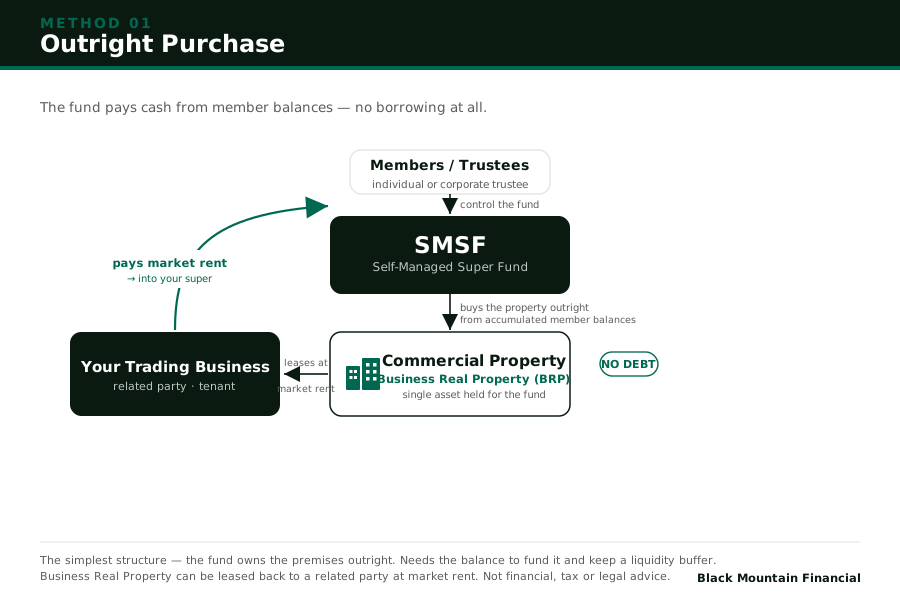
01. Outright purchase
The fund acquires the premises using accumulated member balances, rollovers and contributions. No borrowing, no holding trust, no lending rules to satisfy. It is the cleanest route where the combined balances cover the market value with a liquidity buffer left over.
How it's funded. From within the fund, with no external debt.
The constraint. The fund needs the cash. Concentration and liquidity must hold up under the investment strategy.
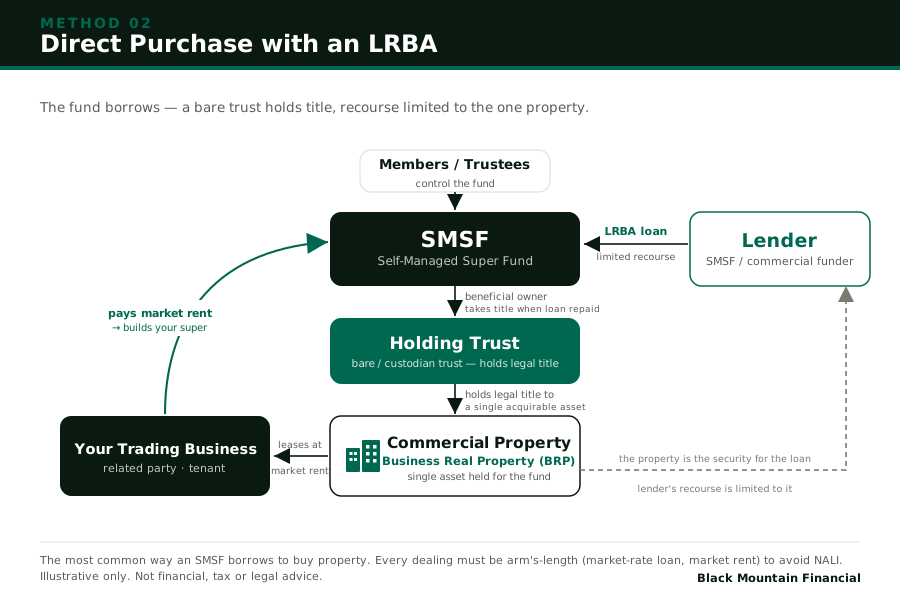
02. Direct purchase with an LRBA
The flagship geared route. The fund borrows under a Limited Recourse Borrowing Arrangement (s67A SIS Act). A holding trust takes title to a single acquirable asset, and the lender's recourse is limited to that property alone. The premises are then leased back to your operating business at market rent.
How it's funded. A commercial SMSF facility from specialist and non-bank lenders, at commercial LVRs to roughly 70–80%.
The constraint. From 10 August 2026, new real-property LRBAs must be business real property, which commercial premises are. Related-party loans must meet PCG 2016/5.
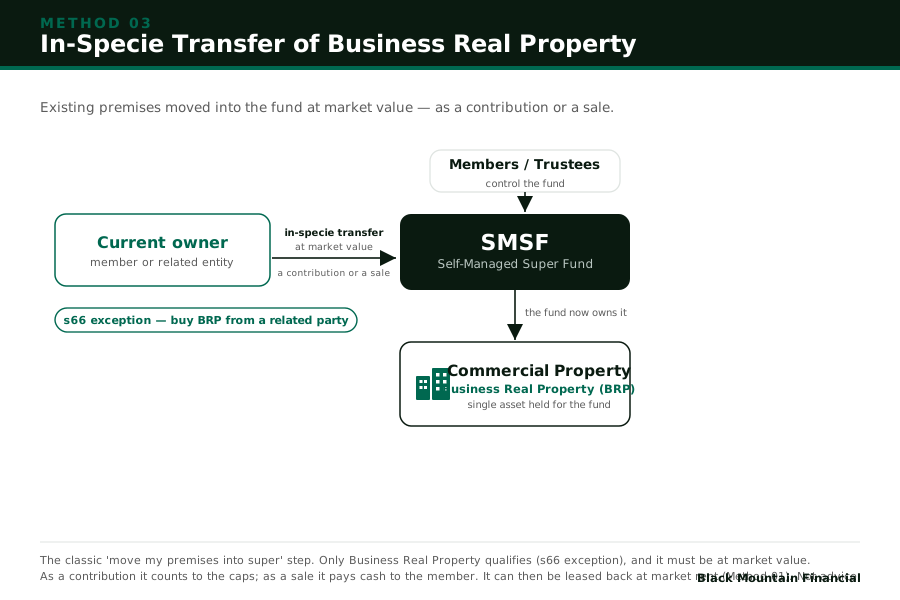
03. In-specie transfer of business real property
Premises you already own, personally or through a company or trust, transferred into the fund at market value. It is permitted because business real property is exempt from the related-party acquisition prohibition (s66(2)). It can be treated as a contribution, a part-sale, or combined with an LRBA to fund the balance.
How it's funded. Often part-contribution, part-borrowing, with a facility sized to the residual.
The constraint. Market valuation, contribution caps, and the duty and CGT consequences to be resolved with your accountant.
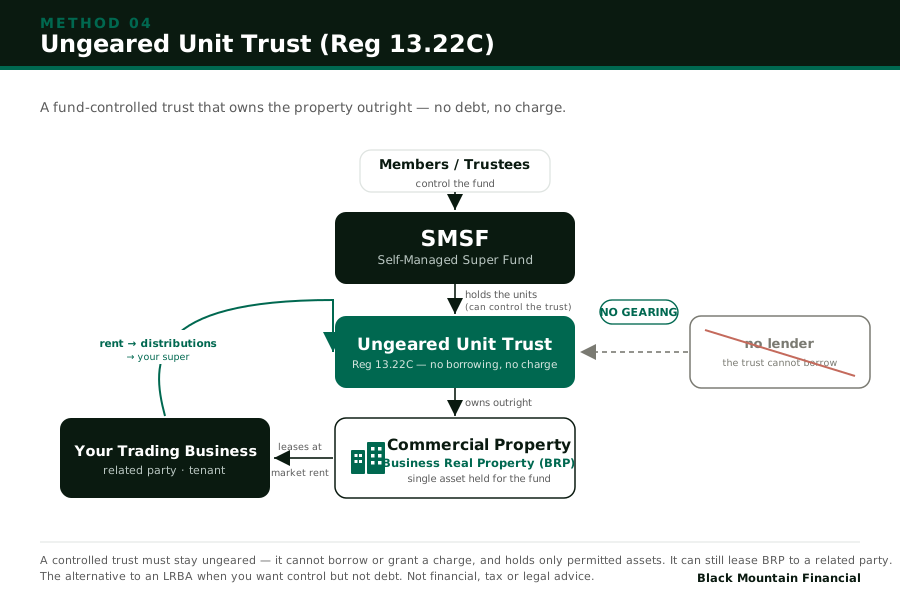
04. Ungeared unit trust (Reg 13.22C)
A unit trust the fund controls, holding the property outright. The fund holds the units; the trust owns the premises with no debt and no charge, and leases them to a related business, permitted only because the asset is business real property. Useful where members want defined, adjustable interests, or where two related funds co-invest.
How it's funded. Cash only. The trust must remain ungeared, permanently.
The constraint. No borrowing, no charge, no interest in another entity, no business. A single Reg 13.22D breach loses the exemption for good.
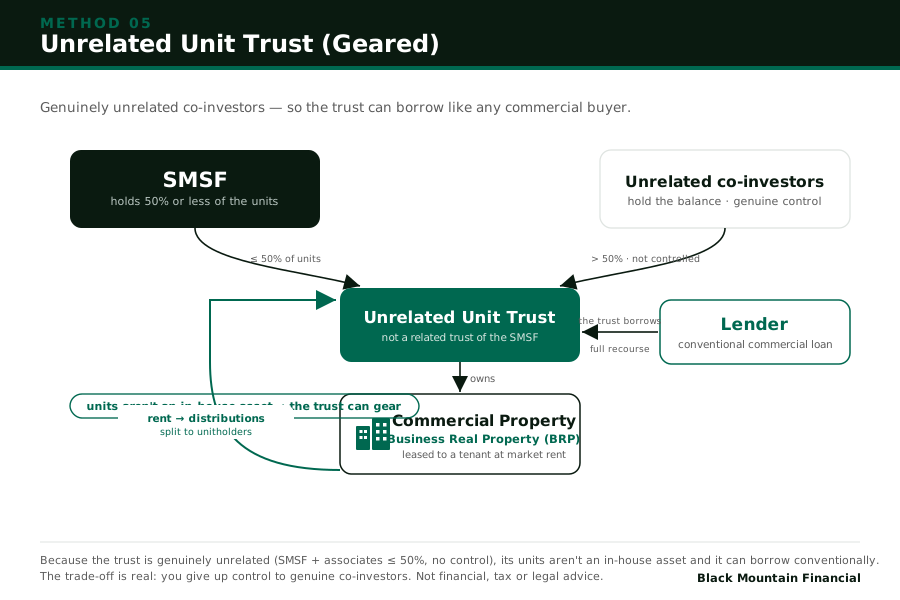
05. Unrelated unit trust (geared)
Where genuinely unrelated funds co-invest, with no party controlling more than 50%, the trust falls outside the related-party rules and can borrow in its own name as an ordinary, full-recourse commercial loan. This funds a cash shortfall without an LRBA, and no bare trust is required.
How it's funded. A standard commercial property loan to the trust itself.
The constraint. The parties must be genuinely unrelated. Spouses' funds are aggregated and cannot achieve this. Control turns on more than the unit register.
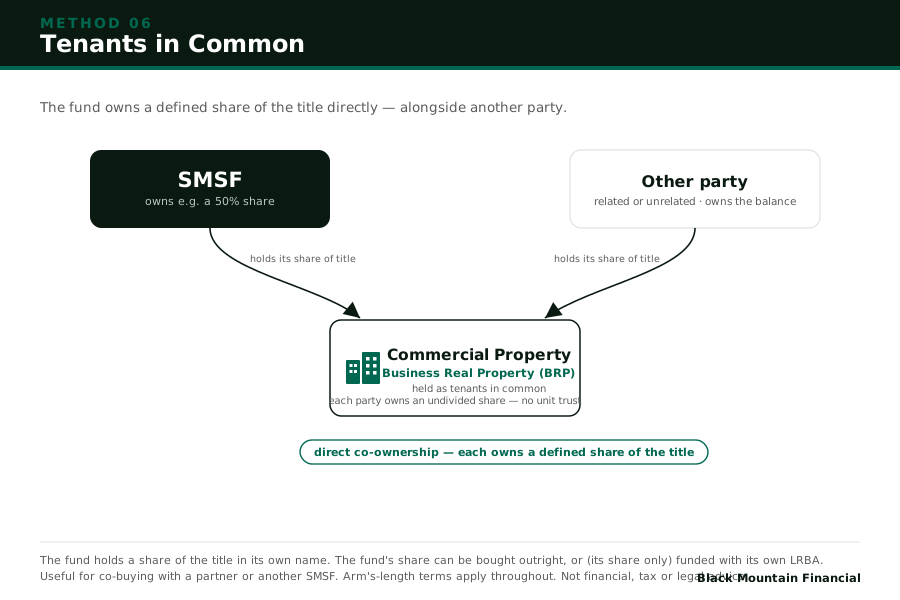
06. Tenants in common
The fund takes a defined share of the title alongside a related or unrelated party, such as a family trust, the business, or a co-investor. Each owner holds their proportion directly, rather than through a pooled vehicle.
How it's funded. The fund's share is usually ungeared; a co-owner may gear their own share outside the fund.
The constraint. A related co-owner's share and any lease are tested against the in-house asset and business-real-property rules.
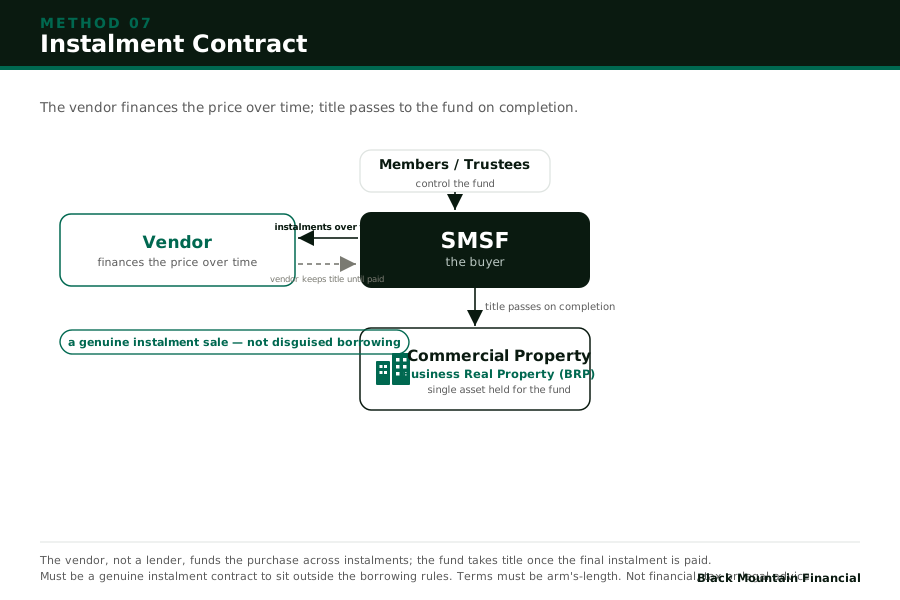
07. Instalment contract
A genuine instalment (terms) purchase, where the price is paid to the vendor over time and title passes on completion. The ATO treats a true instalment purchase as not a borrowing (SMSFR 2009/2), so the LRBA rules do not apply and the shortfall is vendor-funded across the contract term.
How it's funded. By the vendor, over the life of the contract.
The constraint. Narrow and drafting-sensitive. A mortgage-back, interest, or early possession can convert it into a prohibited borrowing.
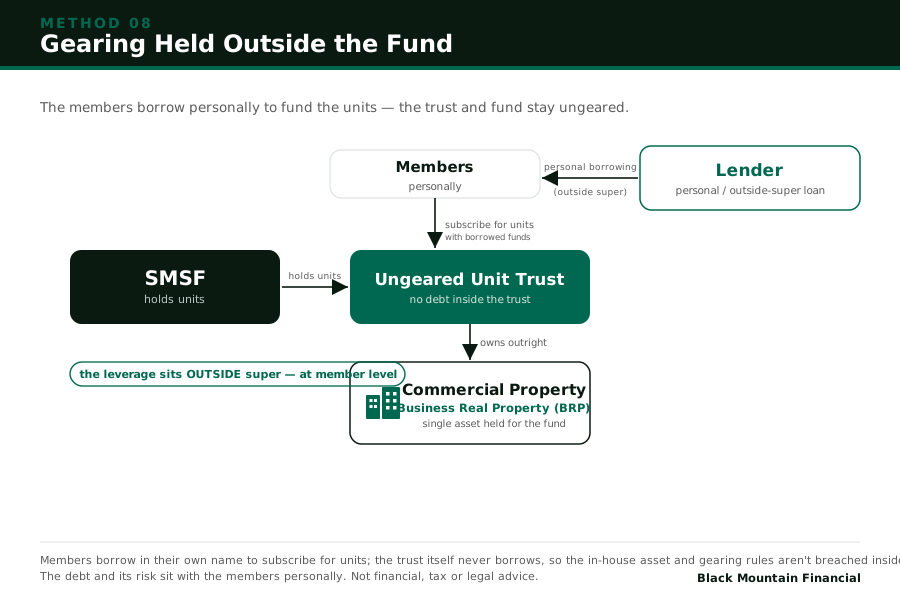
08. Gearing held outside the fund
The members borrow personally, or through a separate entity, to fund their unit subscriptions in an ungeared trust, leaving the property itself unencumbered. The leverage sits outside super, often deductible at a marginal rate above the fund's 15%, while the fund's interest stays clean.
How it's funded. Personal or entity lending, secured on assets outside the fund.
The constraint. No security may touch the fund's units or the trust's property.
One legacy structure. Pre-1999 grandfathered geared unit trusts, where a fund holds units in a related trust that borrows, still exist and remain compliant under transitional rules. They cannot be created today, and injecting new borrowings or units risks the grandfathering. If you hold one, it is worth reviewing before it is refinanced or restructured.
Three questions decide the structure.
Before any lender is approached, the shape of the deal is settled by three answers. They determine which of the eight routes is open to you, and which are closed before you start.
Does the fund need to borrow?
If yes, the field narrows to an LRBA inside the fund, or borrowing held outside it. A controlled unit trust cannot gear.
Is anyone co-investing?
Co-investors change everything. Whether they are related decides between a 13.22C trust, an unrelated geared trust, or tenants in common.
Is it leased to a related business?
A related-party lease is only permitted where the premises are business real property, at market rent, on arm's-length terms.
We arrange the finance. Your adviser confirms the structure.
SMSF commercial deals cross finance, tax and superannuation law. Black Mountain Financial owns the finance: sizing the facility, matching it to the specialist and non-bank lenders who understand these structures, and running the file to settlement. The structuring and compliance sit with your accountant, SMSF specialist and the fund's auditor, and we work alongside them.
George Popadalis leads the practice’s business and commercial pipeline, including SMSF commercial structures. The senior who structures the deal runs it through to settlement, with no junior handoff.
- Read the structure. We confirm which route is open to you before any lender sees the file.
- Coordinate the advisers. We align the funding with your accountant's and SMSF specialist's structuring, so the finance and the compliance agree.
- Arrange and settle. We place the facility with the right lender, manage credit, and run the transaction to settlement.
General information only, not financial, tax, superannuation or legal advice. SMSF structures carry strict compliance obligations under the Superannuation Industry (Supervision) Act 1993 and Regulations. Confirm the right structure and its ongoing compliance with your accountant, SMSF specialist and the fund’s auditor before you act. Lender availability, LVRs and regulatory settings referred to are current as at publication and subject to change.
Frequently Asked Questions
Can my SMSF borrow to buy commercial premises?
Yes, through a Limited Recourse Borrowing Arrangement. The fund borrows to acquire a single property held in a holding trust, with the lender's recourse limited to that asset. Commercial premises used in a business qualify as business real property, which is what the current rules permit.
Can I lease the property back to my own business?
Yes, where the premises are business real property. The lease must be at genuine market rent and on arm's-length terms, the same as you would strike with an unrelated tenant. This is the arrangement most owner-occupiers are structuring toward.
Can I move premises I already own into the fund?
Yes. Business real property can be transferred into the fund at market value, as a contribution, a sale, or a combination, despite the general prohibition on acquiring assets from related parties. Duty, CGT and contribution-cap consequences need to be worked through first.
Do the major banks fund SMSF purchases?
Largely not. SMSF commercial lending is specialist and non-bank territory, with a small number of regional banks participating. Commercial LVRs typically sit at 70–80%, on terms that differ from standard commercial lending. Knowing which lender fits the structure is most of the work.